 English and
 Español. After purchase, use the language toggle in your course Player to switch between English and Spanish at any time.

 EN |
EN |  ES
ES









.jpg)




































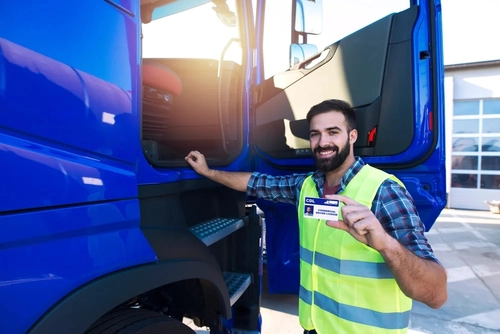













CDL Entry Level Driver Training (ELDT) – Class B to Class A Upgrade
- In accordance with Federal Motor Carrier Safety Administration (FMCSA) and DOT Regulations 49 CFR Part 380
- Learn on your own schedule, from any location, on any device
- Seamless, self-directed mobile training experience
- Get your official certificate as soon as you’re done
- Audio playback for hands-free learning
- Offered in SCORM format, on-demand webinars, virtual live classes, or classroom sessions
1.2
Course Facts


Training Duration

Learning Type

Course Access Validity

Device Support


Certificate Validity
.webp)
CDL Entry Level Driver Training (ELDT) – Class B to Class A Upgrade Course Syllabus
This Class B to Class A Upgrade CDL Training online course consists of 22 lessons categorized under five modules. Students are required to take each lesson in sequential order as listed below.
CDL Entry Level Driver Training (ELDT) – Class B to Class A Upgrade: Introduction
Module 1: Basic Operation of a Commercial Motor Vehicle
This module offers driver-trainees a foundational understanding of Class A Commercial Motor Vehicles (CMVs) and their operation. It focuses on familiarizing trainees with key CMV instruments, controls, and operational characteristics. Key topics covered include Federal Motor Carrier Safety Regulations (FMCSR), vehicle inspections, and essential driving skills such as vehicle control, shifting, and backing techniques. The module also addresses important procedures like coupling and uncoupling, providing a comprehensive introduction to safe and effective CMV operation.
- Lesson 1: Orientation
- Lesson 2: Control Systems and Dashboard
- Lesson 3: Pre-Trip and Post-Trip Inspections
- Lesson 4: Basic Operation
- Lesson 5: Shifting or Operating Transmissions
- Lesson 6: Backing and Docking
- Lesson 7: Coupling and Uncoupling
Module 2: Safe Operating Procedures
This module will concentrate on the safe operation of combination vehicles in a variety of road, weather, and traffic conditions. Trainees will develop essential skills for navigating different driving environments while ensuring adherence to Federal regulations. A key focus will be on the correct use of seat belt assemblies, as required by 49 CFR Section 392.16 of the Federal Motor Carrier Safety Regulations. This regulation states that no driver may operate a commercial motor vehicle, nor may any motor carrier require or allow a driver to operate one, unless the driver is properly restrained by a seat belt assembly installed at the driver’s seat.
- Lesson 8: Visual Search
- Lesson 9: Communication
- Lesson 10: Distracted Driving
- Lesson 11: Speed Management
- Lesson 12: Space Management
- Lesson 13: Night Operation
- Lesson 14: Extreme Driving Conditions
Module 3: Advanced Operating Practices
Building on your previous learning in Module 1 and 2, this module will focus on practical driving skills. You will learn how to anticipate and respond to potential hazards, and safely operate commercial vehicles in various driving situations.
- Lesson 15: Hazard Perception
- Lesson 16: Skid Control, Recovery, Jackknifing, and Other Emergencies
- Lesson 17: Railroad-Highway Grade Crossings
Module 4: Vehicle Systems and Reporting Malfunctions
This module will provide you with a thorough understanding about combination vehicles, including their systems and how they work. You'll learn why vehicle inspections, operation, and maintenance are so important for safe and efficient driving.
- Lesson 18: Identification and Diagnosis of Malfunctions
- Lesson 19: Roadside Inspections
- Lesson 20: Vehicle Maintenance
Module 5: Non-Driving Activities
This module will focus on essential non-driving activities for a CMV's safe and efficient operation.
- Lesson 21: Hours of Service Requirements
- Lesson 22: Fatigue and Wellness Awareness
Final Examination
Frequently Asked Questions
- It equips drivers with the knowledge and skills necessary to operate large commercial vehicles safely, reducing the risk of accidents and improving road safety.
- It ensures that drivers meet Federal requirements set by the FMCSA, which helps maintain consistent standards across the industry.
- The course provides advanced training on driving techniques, safety regulations, and vehicle maintenance specific to Class A commercial vehicles. This training can enhance your driving skills, making you a safer and more efficient driver.
- It helps drivers meet the industry’s standards for professionalism and competence, which can enhance their employability and career prospects.
- Upgrading your license from Class B to Class A allows you to drive a wider range of commercial vehicles, including larger and heavier trucks. This can significantly increase your earning potential and open up new career paths within the trucking industry.
- Being at least 18 (21 years old to drive across state lines).
- Hold a valid Class B driver’s license in the state where you plan to be trained.
- Passing a Department of Transportation (DOT) physical exam and drug screen.
- Meeting any additional requirements set by the training provider or state licensing agency.
Once you complete this ELDT Class B to Class A Upgrade training for your CDL, we will report your completion to the Federal Motor Carrier Safety Administration (FMCSA) through the Training Provider Registry (TPR). This ensures that your training records are updated and accessible to the FMCSA, verifying that you have met the necessary requirements.
Once this is done, you are eligible to take your State's Class A knowledge test. Successfully passing the knowledge test will qualify you to receive the Class A CDL.
No. You must pass a medical exam to ensure you are physically qualified to operate a commercial vehicle. This test must be conducted by a professional listed on the Federal Motor Carrier Safety Administration's (FMCSA) National Registry of Certified Medical Examiners.
You must also complete this online CDL ELDT Class B to Class A Upgrade theory course before taking the State Class A Knowledge Exam, which is typically administered at the state motor vehicle office. Upon finishing this Class B to Class A Upgrade CDL training course, our system will automatically upload your ELDT records to the U.S. Department of Transportation's (DOT) Training Provider Registry (TPR). Once this is done, you are eligible to take your State's Class A knowledge test. Following the knowledge test, you must pass a skills test that includes both a pre-trip inspection and a driving test.
Upgrading to a Class A CDL may require passing a Federally required background check. It is essential to check with your local Department of Motor Vehicles or Motor Vehicles Division office if this is necessary.
Choose Your Ideal Training Format:



SCORM Package


Virtual Instructor-Led
$10.00/Seat (minimum 10 seats)

In-Person Group
$10.00/Seat (minimum 10 seats)


The ROI of Online Safety Training
Discover the value of our efficient alternative to live training, and calculate your return on investment.

Recommended Courses